

| Basic Computer Network
Architecture Introduction This document outlines the basic architecture employed in all modern networked systems. I usually find that these diagrams help people understand the complexity of integrating these components together to provide an overall system to the user. A Simple Network System A network system can be divided into 2 core areas, Server and Client, communicating via a Network infrastructure. The reason why this approach has become important to businesses is that by dividing it up in this manner you can allow sharing of work, information and resources. Examples of this type of architecture are:
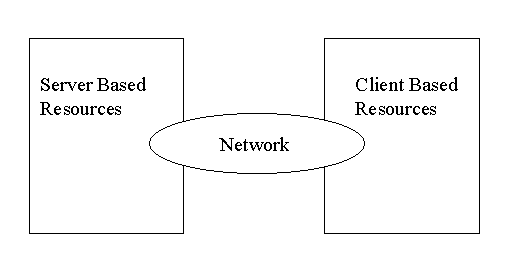 If we take a closer look at the model, we find that it can be further sub-divided into 5 key layers which can equally apply to both clients and servers (see figure 2). These layers are:
The Application Layer has been divided into 2 layers, rather than left as one, to differentiate between "Off the Shelf" packages and "Proprietary" applications. This is also done because "Proprietary" software is usually written to employ "Off the shelf" packages to provide a functional layer to the system. In architectural terms this is important when defining an organisation's standards. Figure 2 A Network System Architectural Model 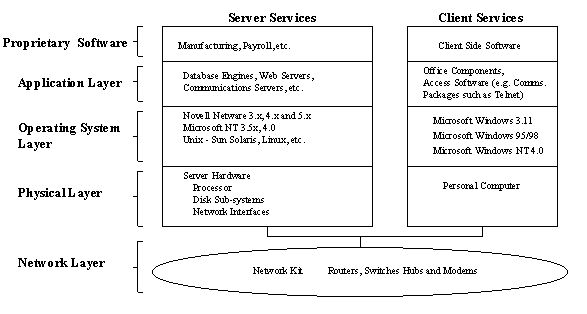
Advanced Network System In the previous sections we have seen how a networked system is divided between client and server resources. In high transactional based environments there has been a trend to split the work up even further to a third intermediary, known in database environments as the Broker. The role of the Broker is to off-load processing load, either from the client, server or both, as a means to boost performance. Common examples of this are:
Figure 3 Advanced Network Model 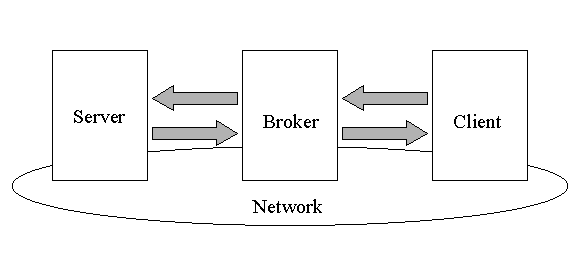
|